

Car Loans Australia :: News
SHARE

Share this news item!

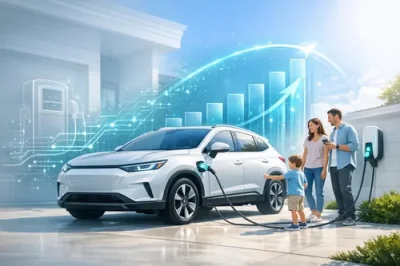
Record Surge in Electric Vehicle Loan Applications in Australia

MONEYME Reports 90% Increase in EV Financing Amid Rising Fuel Prices

Record Surge in Electric Vehicle Loan Applications in Australia?w=400

The information on this website is general in nature and does not take into account your objectives, financial situation, or needs. Consider seeking personal advice from a licensed adviser before acting on any information.

In a remarkable development, fintech lender MONEYME has observed a substantial 90% month-on-month increase in electric vehicle (EV) loan applications from February to March 2026.
This surge underscores a significant shift in Australian consumer behaviour towards electric vehicles, driven by escalating fuel prices and growing environmental awareness.

According to MONEYME's data, applications for their Autopay loans for fully electric vehicles rose by 90% between February and March 2026. Year-on-year, EV loan applications have skyrocketed by 270%, while hybrid vehicle applications increased by 44% over the same period. In contrast, loan applications for petrol-only vehicles declined by 12% year-on-year.

Clayton Howes, CEO of MONEYME, attributes this trend to Australians' response to fuel price volatility and supply uncertainties. He notes that the rapid increase in EV financing reflects a structural shift in purchasing behaviour, with consumers prioritising long-term vehicle cost savings and environmental considerations.

This data aligns with broader market trends. The Australian Automotive Dealer Association (AADA) reported that battery electric vehicle sales reached 15,839 units in March 2026, accounting for 12% of total new vehicle sales for the year. This represents a 42% month-on-month and 92% year-on-year increase, highlighting the accelerating adoption of electric vehicles in Australia.

For prospective car buyers, these trends suggest a growing availability of financing options for electric vehicles. As the market continues to evolve, consumers are encouraged to explore various loan products and consider the long-term benefits of transitioning to electric vehicles, including potential savings on fuel and maintenance costs.

Published:Saturday, 18th Apr 2026
Author: Paige Estritori

Please Note: We do not endorse any specific products or companies. Some content is sourced from third parties, including press releases, and may not be independently verified for accuracy or completeness.

Share this news item:

Rate this article

0 Comments

No comments yet. Be the first to share your thoughts.

Finance News

Softer Used-Car Prices Could Shift Finance Decisions
27 Aug 2026: Paige Estritori
Australia's used-car market appears to be moving into a more balanced phase, with recent industry updates pointing to improved vehicle availability and less pressure on prices across some mainstream segments. That is welcome news for buyers who spent the past few years dealing with limited stock, long new-car wait times and unusually firm second-hand values. - read more
What the Latest RBA Rate Hold Means for Car Buyers
13 Aug 2026: Paige Estritori
The Reserve Bank of Australia's latest decision to leave the cash rate unchanged keeps car buyers in a familiar holding pattern: borrowing costs are not rising sharply, but they are not easing quickly either. For households planning a new or used vehicle purchase, that means the focus should remain on preparation, comparison and affordability rather than waiting for a dramatic rate shift. - read more
What ASIC’s Car Loan Review Means for Australian Buyers
23 Jul 2026: Paige Estritori
Australia’s car finance market is sending buyers two important messages at once. Recent July rate snapshots show some secured car loans advertised from around the mid-five per cent range for strong-credit borrowers, suggesting competition is still alive for well-prepared applicants. At the same time, ASIC’s 24 June 2026 review of motor vehicle finance has put the spotlight on fees, third-party sales channels and borrower outcomes. - read more
What July's Cheapest Car Loan Rates Mean for Australian Buyers
16 Jul 2026: Paige Estritori
Australian car buyers have a fresh benchmark for what a competitive loan may look like, with Canstar's July 2026 car loan snapshot showing some secured new and near-new car loans advertised from the high five per cent range. For households already juggling fuel, insurance, registration and cost-of-living pressures, that headline number may look appealing. - read more
Luxury Car Tax Thresholds Rise for 2026–27: What It Means for Your Next Car Loan
02 Jul 2026: Paige Estritori
Australian buyers shopping for a higher-priced new car have a fresh number to factor into their budget from 1 July 2026, with the Luxury Car Tax thresholds indexed for the 2026–27 financial year. - read more


Car Loans Articles

Decoding Car Loan Fees: What to Watch Out For
Navigating the car loan landscape in Australia can feel like a daunting task. With a vast array of options available, choosing the right car loan can significantly impact your financial well-being. Understanding the fees associated with car loans is crucial, as they play a significant role in the total cost of the loan. - read more
The Pros and Cons of Car Loans for Used Vehicles in Australia
With the rising cost of living, many Australians are opting for used vehicles as a cost-effective alternative to brand-new cars. Buying a used car can offer significant savings, reducing the initial financial burden while still providing reliable transportation. - read more

Secured vs Unsecured Car Loans in Australia
Buying a car is a significant financial decision, and the type of loan you choose can affect your repayments, borrowing costs and financial flexibility. In Australia, car loans are commonly discussed as either secured or unsecured, depending on whether the vehicle or another asset is used as collateral. Understanding how each loan type works can help you compare terms, ask better questions and consider the risks before committing to a finance agreement. - read more
5 Critical Steps to Take Before Applying for a Car Loan in Australia
Stepping into the world of auto financing can be as daunting as it is exciting. The commitment of a new car loan demands more than just desiring your dream car; it necessitates a balanced budget and a solid financial plan. Understanding how to prepare before signing on that dotted line is not only wise, it’s imperative for your financial health. - read more
5 Strategies for Balancing Your Budget with a New Car Loan
With the excitement of purchasing a new vehicle, the financial responsibilities that come with a new car loan can often be overlooked. Balancing your budget when you have taken on a new car loan is crucial to financial well-being and long-term happiness with your purchase. In this article, we will explore five practical strategies that can help you navigate the common financial challenges that accompany car loans. - read more


Need Help Finding a Loan?
Get a free car loan eligibility assessment and compare offers tailored specifically to your circumstances.

Let's help find your car loan!

Loan Amount:

Postcode:

All quotes are provided obligation-free by a participating broker from our national referral partner network. We respect your Privacy.

All finance quotes are provided free (via our secure server) and without obligation.
We respect your privacy.

Knowledgebase
Balance Sheet:
A financial statement that summarizes a company's assets, liabilities, and shareholders' equity at a specific point in time.