Car Loans Australia Vehicle Lease Repayment Calculator
Use this calculator to calculate the monthly lease payments for a motor vehicle. Compare various car leasing interest rates, loan terms and residual/balloon payments.
Calculator results are estimates only and not quotes. Actual quotes will be provided by licensed brokers after you submit an enquiry.
Car Lease Details:
Important!
Car Lease Interest Rates differ from lender to lender and will depend on your individual circumstances (credit history, employment status, age, etc.). To find out if you qualify ... and for a free, personalised interest rate and repayment quote,
please CLICK HERE
Car Lease Amortisation Calculator
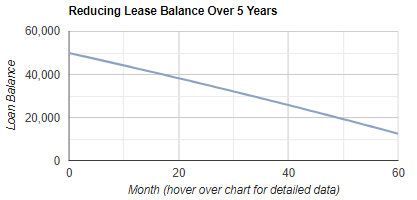
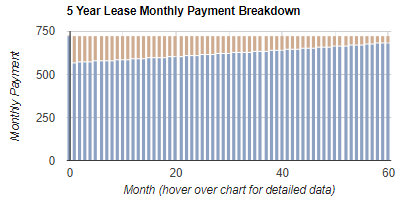
The following amortisation graphs detail month-by-month data on the progress of the proposed loan. The first chart below examines the reducing loan balance over the course of the finance contract term. The second graph illustrates the portion of each monthly repayment allocated to payment of interest vs principal reduction.
How to use our Vehicle Lease Repayment Calculator
Our Vehicle Lease Repayment Calculator helps you estimate monthly lease repayments for a motor vehicle by modelling three key variables: interest rate, lease term, and the residual or balloon amount payable at the end. It’s important because small changes to any of these inputs can materially affect cash flow, total interest over the term, and the end-of-lease obligation, helping you compare scenarios before you speak with a lender or novated leasing provider.
How to complete the form for the best result:
1. Purchase Price
Enter the total amount you want financed for the vehicle. Include relevant upfront costs you intend to roll into the lease (for example, on-road costs or insurance where applicable). Use whole numbers only (no decimals, commas, or dots).
2. Balloon or Residual Value (percent of purchase price)
Select the residual percentage. A higher residual generally reduces the monthly payment but increases the amount left owing at the end, which can increase overall cost across the term. Choose a residual that matches your intended end-of-lease plan (keep, refinance, or sell).
3. Term of Loan (years)
Choose the number of years. Longer terms usually reduce monthly repayments but can increase total interest paid. Select a term that suits how long you expect to keep the vehicle and your budget tolerance.
4. Interest Rate (per annum)
Select an interest rate to simulate. Use a conservative rate when stress-testing affordability, because your actual rate may differ depending on lender policy and your circumstances.
5. Calculate
Click calculate to generate your estimated monthly lease repayment and amortisation visuals.
How to interpret the results:
1. Monthly repayment estimate: Use this as a budgeting guide and compare scenarios by adjusting term, rate, and residual.
2. Amortisation charts: Review how the balance reduces over time and how much of each payment is interest versus principal; this highlights when interest costs are highest and the impact of a larger residual.
ASIC compliance note: This guide is general information only and does not consider your objectives, financial situation or needs. Consider the full lease contract, fees, taxes, insurance, maintenance, and end-of-lease options before deciding, and consider getting personal advice if needed.
Self-employed borrowers can apply for car finance in Australia, but lenders may assess income differently from PAYG employees. This guide explains common document requirements, low doc options, ABN car finance considerations and practical preparation steps. - read more
In this article, we are embarking on a guided journey that we believe will help immensely in navigating the intricacies of the car loan process. - read more
Finding an affordable car finance option can make the dream of owning a vehicle a tangible reality for many Australians. It’s about understanding the intricacies of the loan market, interest rates, and finding a plan that aligns with your financial prospects and constraints. In a society built on the convenience of mobility, securing a car that meets both your needs and your budget is essential. - read more
Buying a car is a significant financial decision, and for many, it means exploring the world of car finance. In Australia, the options are plentiful, and understanding them is key to making an informed choice. Car finance can seem daunting, with various loan types, interest rates, and repayment plans to consider. But fear not – a clear understanding of these options can steer you towards a deal that complements your financial circumstances. - read more
Finding the right car loan in Australia can be just as critical as selecting the car itself. Car finance, though a common undertaking, involves nuanced decisions that can have a significant impact on your financial future. - read more
Green car finance is becoming a more visible part of Australia’s car loan market, with lenders continuing to promote discounted rates for eligible electric, hybrid and other lower-emission vehicles. For buyers weighing up a new EV, plug-in hybrid or fuel-efficient model, the headline appeal is obvious: a lower rate can reduce the cost of borrowing and may make a higher purchase price feel more manageable. - read more
Australia’s new-car market is showing more signs of competition, with recent industry updates pointing to sharper drive-away offers, run-out campaigns and finance-led promotions across selected brands. For buyers, that can make the showroom feel more attractive than it did during the tight-supply years, when wait times and limited stock gave sellers more pricing power. - read more
Australia's used-car market appears to be moving into a more balanced phase, with recent industry updates pointing to improved vehicle availability and less pressure on prices across some mainstream segments. That is welcome news for buyers who spent the past few years dealing with limited stock, long new-car wait times and unusually firm second-hand values. - read more
The Reserve Bank of Australia's latest decision to leave the cash rate unchanged keeps car buyers in a familiar holding pattern: borrowing costs are not rising sharply, but they are not easing quickly either. For households planning a new or used vehicle purchase, that means the focus should remain on preparation, comparison and affordability rather than waiting for a dramatic rate shift. - read more
Australia’s car finance market is sending buyers two important messages at once. Recent July rate snapshots show some secured car loans advertised from around the mid-five per cent range for strong-credit borrowers, suggesting competition is still alive for well-prepared applicants. At the same time, ASIC’s 24 June 2026 review of motor vehicle finance has put the spotlight on fees, third-party sales channels and borrower outcomes. - read more