
The information on this website is general in nature and does not take into account your objectives, financial situation, or needs. Consider seeking personal advice from a licensed adviser before acting on any information.
If you're thinking of borrowing money to buy a car, boat, debt consolidation, home repairs, medical bills or anything else for that matter, here are some red hot tips to make the process much, much easier.
#1. Avoid unsecured loans if possible
Avoid using unsecured personal loans if you can put up some security for your borrowings. This will get you a lower interest rate. A home equity loan, or redraw of extra repayments, allowing you to borrow against the equity built up in your own home or an investment property, is the best option of all, and could get you finance at up to 5 percent less than a personal loan.
#2. Be honest in loan applications
Be honest about why you want the loan. Your bank may be able to offer you a loan option that better suits your circumstances. There are an increasing variety of different types of personal credit these days; car loans, commercial loans, leases, home equity loans, are just some of the examples.
#3. Can't get a standard loan? There are alternatives
If the banks, building societies and credit unions won't lend to you because you're self employed, newly arrived in the country or have a poor credit history, consider the booming non-conforming and "low doc" loan market. A number of non-bank lenders offer loans which especially cater for this type of borrower. The interest rates on non-conforming loans are generally higher but come down after a few years of on-time repayments.
#4. Check your statements for errors
There are claims that more than 50 percent of loan statements contain calculation errors. Simple mistakes, like the entry of the incorrect balance or the application of the wrong interest rate at the wrong time can be costly and mostly favour the lender. We all make mistakes, even bank computers make them and that's why borrowers should keep a close eye on loan statements. Various software for your home PC is available that can run a check on your statements.
#5. Consider smaller lenders too
When shopping around for a car loan, consider community banks, credit unions and other smaller financial institutions which might be more approachable, and offer lower interest too.
#6. Do you have to take out a personal loan at all?
Think twice before borrowing money without security. You may have a better option already available; home equity extension to your home loan, a new loan that uses your property as security, a credit card, or even a rich relative!
#7. Do you qualify for a 'relationship discount'?
Relationship discounts are available from banks and credit unions for those borrowers who consolidate a range of banking business with the one institution. Home and personal loan interest rate discounts, term deposit bonuses, savings account fee waivers and credit card annual fee waivers are commonly offered.
#8. Don't just take the dealer finance
Don’t accept loan or lease finance offered by a car dealer before comparing the offer with finance options offered by your bank or other credit providers. Dealer finance might be less hassle but you could well end up with an expensive loan and more restrictive terms and conditions. The same goes when buying furniture or any consumer goods where finance terms are offered.
#9. Don't make multiple applications
Don’t fill out applications at several financial institutions and have all of them checking into your credit history. This can make you look desperate and lower your credit score.
#10. Don't rely solely on comparison rates
All lenders must now include "comparison rates" in advertisements for their home loans and personal loans to help consumers get a feel for their total cost - fees and the interest. Don't rely solely on comparison rates when choosing a loan and beware of their shortcomings. They only take into account fees and interest rates, not the features and how suitable the loan is for your circumstances.
#11. Have the right information when applying
What you will be required to supply in any application for lease finance will depend on whether the lease is for personal or business use.
Personal lease applications will require:
- proof of current employment
- income details or tax returns
Business lease financing requires more detailed information and may include your:
- balance sheet
- tax returns
- cash flow projections
- business plan
Confirm with the lender what you will need before the interview.
#12. Have you considered a credit card?
Consider also a credit card as your source of credit. Interest rates are generally higher but credit cards are easier to secure and offer greater flexibility of repayments.
#13. Honesty counts
Be honest about why you want the loan. Your bank may be able to offer you a loan option that better suits your circumstances. There are an increasing variety of different types of personal credit these days; car loans, commercial loans, leases, home equity loans, are just some of the examples.
#14. Keep accurate records
Keep accurate records of your deposits and ATM transactions. It is also wise to keep copies of your loan application and approval documents in a safe place.
This is the best way to avoid hefty fees which may be charged by a bank when its customers want to see copies of their cheques or loan files.
#15. Know what interest rate applies
When offered car finance, either lease or loan, always be sure you know what interest rate applies. Lenders often ‘sell’ you their finance packages by quoting the monthly repayments only. This may disguise a high interest rate.
#16. Look beyond the banks
Get a feel for what's on offer across the wide range of financial providers around these days. Credit unions, building societies, mortgage originators, community banks and boutique online or telephone banks may offer better interest rates or lower fees than the big banks because they are anxious to win new business or they are non-profit organisations.
#17. Try lenders with whom you are a regular customer
Take advantage of the human factor. Being a familiar face may earn you some slack if your credit background is smudged.
#18. Understand what's on offer
Is the interest rate fixed or variable? What up-front, annual or ongoing fees are charged?
The Great Aussie Car Buyer's Handbook: Understanding Car Loans, Rates, Fees and Repayment Options
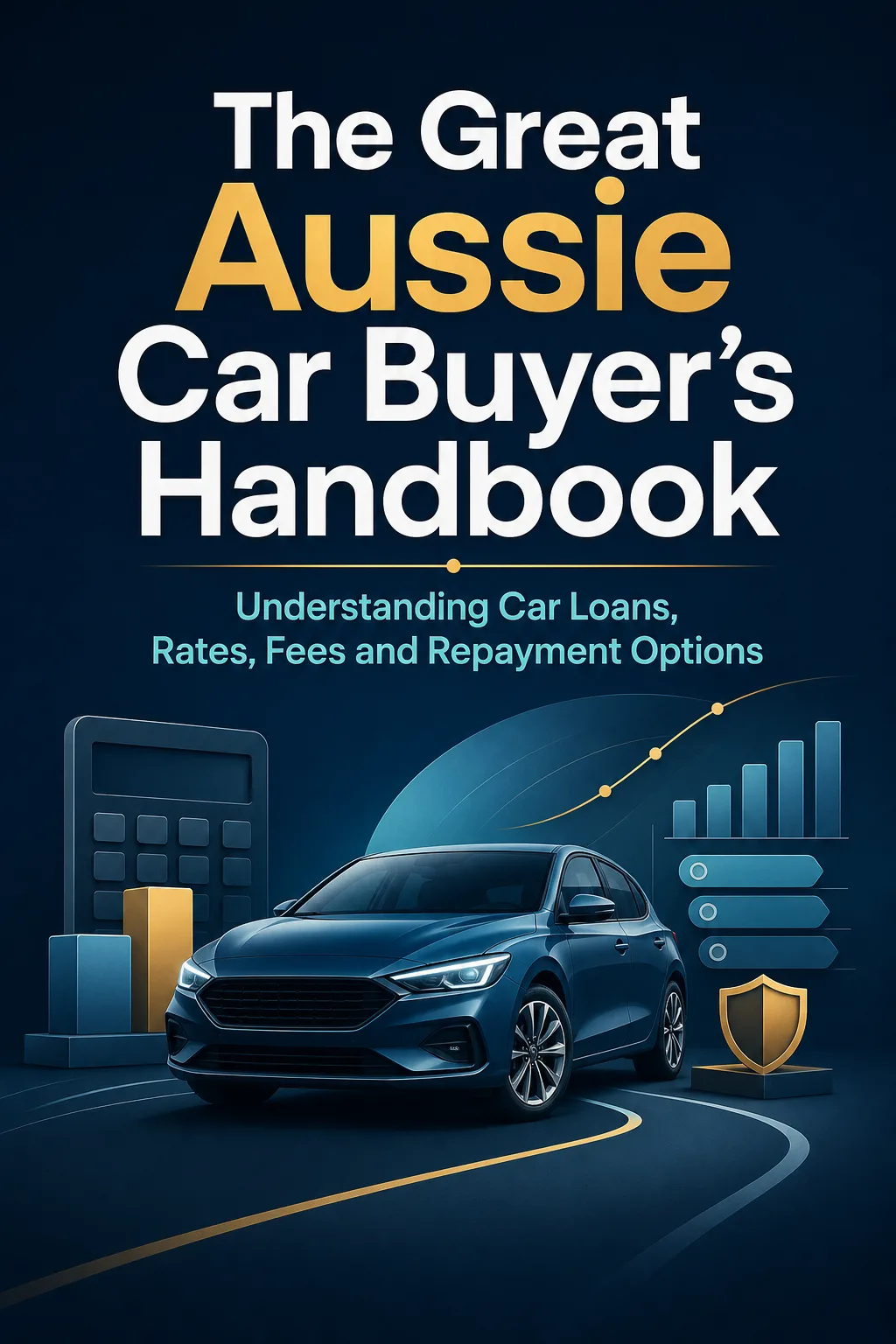
Buying a new or used car can be exciting, but the finance can quickly become confusing. This plain-English guide helps Australian car buyers understand the key moving parts of car loans, from interest rates and comparison rates to fees, loan terms, repayments and balloon payments.
Inside, readers will learn how to think through affordability, compare secured and unsecured options, understand pre-approval, review dealer finance and online alternatives, and ask better questions before committing. With practical examples, checklists, FAQs and calculator-friendly guidance, it is designed to support more confident car finance decisions.
Published: Sunday, 1st Aug 2021
Author: Paige Estritori







No comments yet. Be the first to share your thoughts.